Outdoor living may be trending everywhere, but in the Bay Area, it’s something else entirely. With soft, sloping hills, gorgeous bay views and golden-hour light made for lingering, it’s no wonder local homeowners are rethinking their exterior spaces as true extensions of the home.
To find out how to make the most of these alfresco spaces — whether you’re starting fresh or updating what you’ve got — we turned to some of the region’s most thoughtful architects and landscape designers. Their tips go beyond the basics, offering smart, stylish and surprising ways to elevate the way you live outdoors.
1. Start with a Strong Indoor-Outdoor Connection
Designing a truly inviting alfresco living space starts with rethinking the threshold between indoors and out. When done well, the transition is so smooth you almost forget where the indoors end and the outdoors begin.
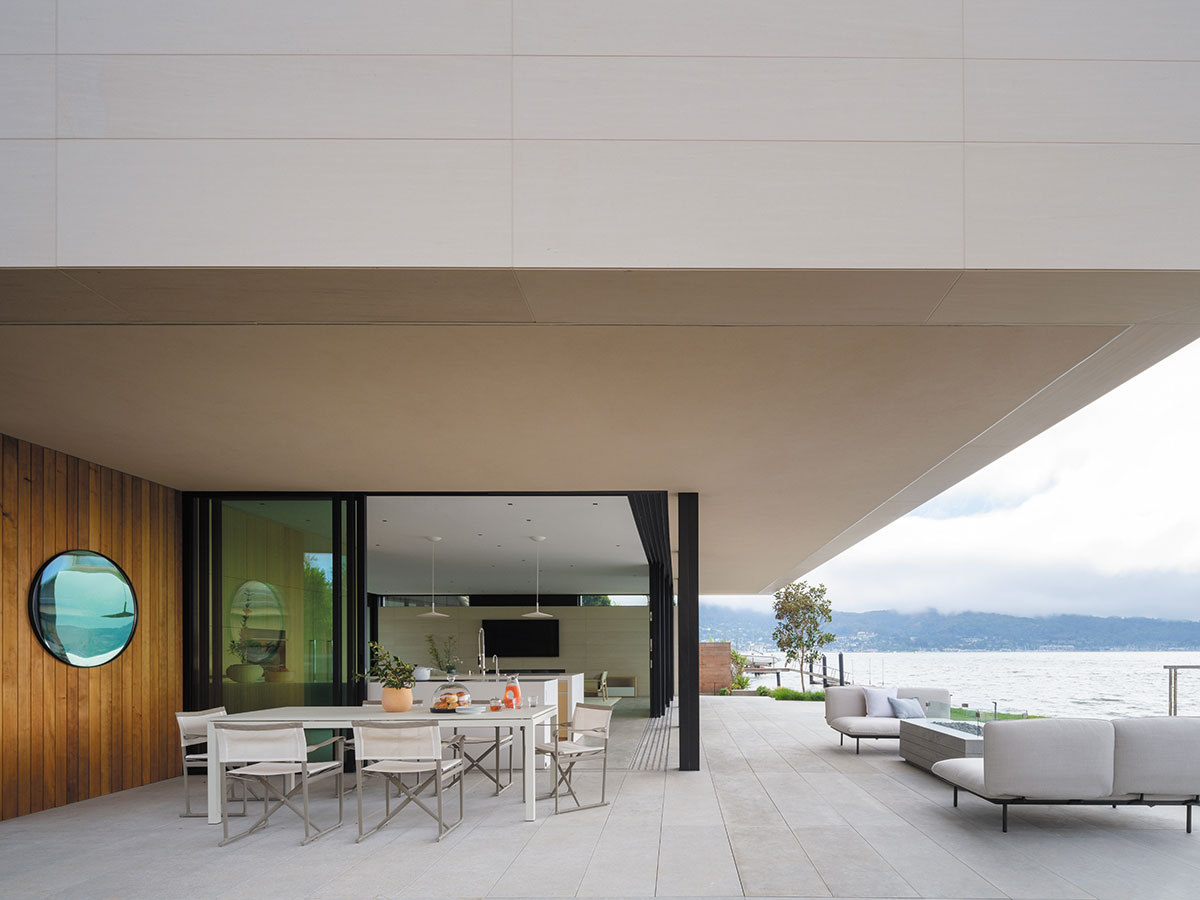
“The use of large-scale sliding glass walls has transformed how we connect interior and exterior living areas,” says architect Frederico Engel from San Francisco-based Butler Armsden Architects. For one of his recent projects in Marin along Richardson Bay, he incorporated entire walls of double-pane glass doors that slide open to link the great room with an outdoor kitchen and terrace, creating an expansive indoor-outdoor space with wow-worthy water views. One clever touch: a mirror placed on the wall of the outdoor dining area. “Someone always ends up facing away from the view at a dining table,” Engel says. “The mirror reflects the water, so even if your back is to the bay, you still get to enjoy it.”
Mill Valley architect Chris Dorman of Dorman Associates takes a similarly holistic approach to connecting indoor and outdoor spaces. In a Mill Valley remodel, he replaced the home’s traditional doors with pocketing glass panels that disappear completely into the walls. “When you open the doors, the line between inside and outside is gone,” he says, “and the usable living space of the room is essentially doubled.”
Materials play a subtle but important role in blurring the indoor-outdoor boundary. Engel often uses stone or porcelain tile with a natural limestone look to continue flooring from the interior to the patio. “With the porcelain, you get the timeless feel of limestone without the staining or maintenance,” he says. “It makes the space feel unified, and it holds up to the elements.”
2. Design for Wellness
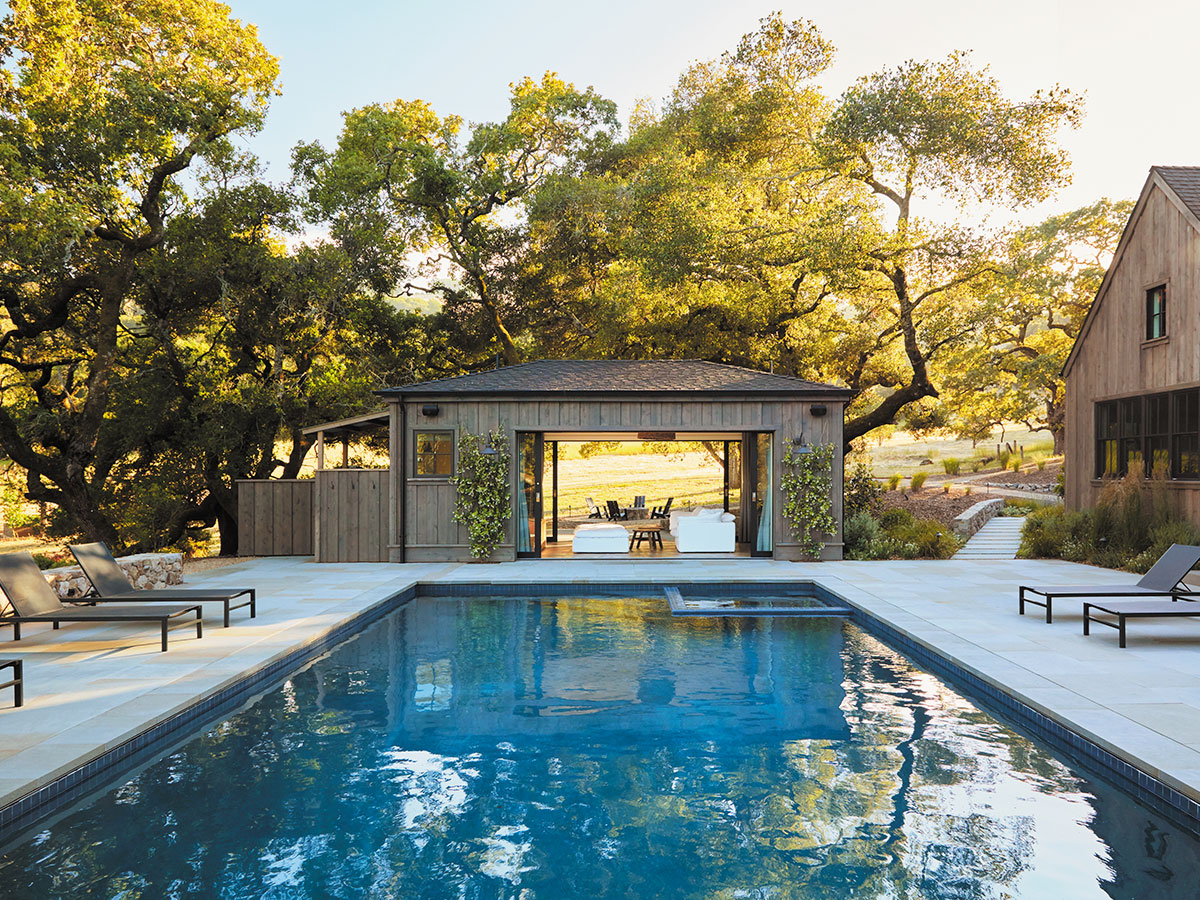
More than ever these days, homeowners are looking to their yards and gardens not just for beauty, but for balance. For San Francisco-based landscape designer Katharine Webster, that starts with intentional choices that engage the senses and create calm. “It’s not just what the yard looks like; it’s also about how it makes you feel,” she says.
For a family ranch getaway in Sonoma, Webster designed an open meadow space where her clients — multiple generations from the same family — could gather, stretch or simply unwind. “It feels very open, but also quiet,” she says. “It gives people room to breathe.”
She often incorporates layered plantings including grasses and perennials to create movement, rustling textures and softness. Water features, too, can make a space feel alive, enchanting and meditative. And when it comes to poolscapes, Webster says they should feel like “a garden you happen to be swimming in,” vibrantly framed with beautiful plantings and deftly integrated into the landscape.
Landscape architect David Roche of Sonoma firm Roche + Roche also notes a growing interest in health-focused, spalike amenities. “More and more clients are asking for cold-plunge tubs, hot tubs and saunas, and that’s something you can do even in a small backyard,” he says.
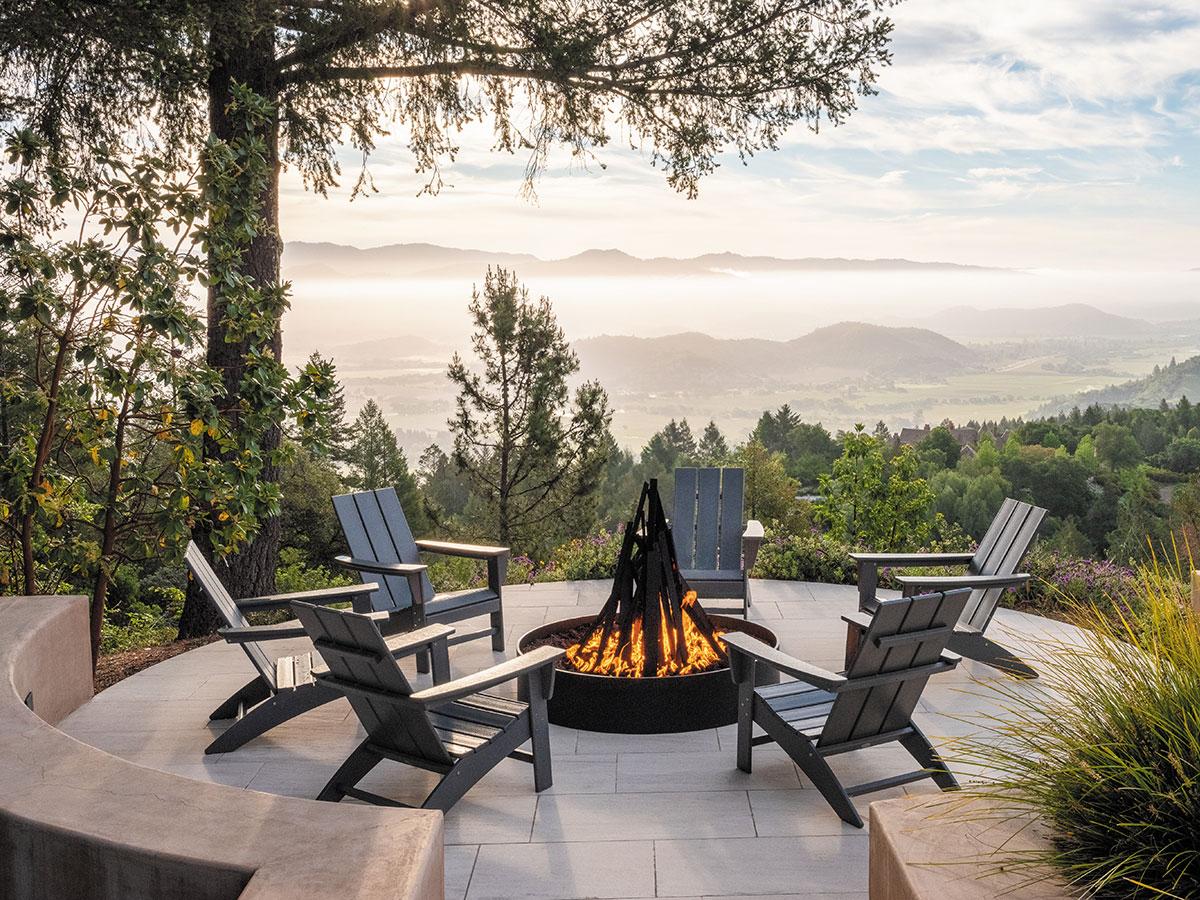
To infuse a little wellness into your own outdoor area, tuck a few herbs or veggies into an edible garden bed or add a bench under a shady tree for quiet and reflection. “Landscapes aren’t just about beautiful environments,” says Webster, “they’re also about helping people expand themselves.”
3. Make Comfort a Four-Season Priority
In the Bay Area, outdoor living doesn’t stop when the temperature dips. “It’s a climate where you can be outside most of the year, but you still have to design for it,” says Engel. That means planning for shade, shelter, warmth and lighting.
“If it’s dark, cold or windy, people go inside,” Dorman says. “But if it’s lit, warm and inviting, they’ll linger.” Firepits — whether built-in or freestanding — can go a long way in making outdoor spaces cozy and communal and are still in high demand. “They’re often the first thing people gather around,” Dorman says.
One smart solution Engel often uses to maintain climate comfort is a motorized louvered pergola system. “It has a rain sensor and can open and close depending on the weather or the amount of sun you want,” he explains. “It gives you a lot of flexibility — shade when you need it, openness when you want it, and protection if it rains. It’s great for year-round use.”
For cooler months, Engel often recommends installing radiant heaters directly into a pergola ceiling, especially above dining tables or lounge areas. “They’re tucked in and not super visible,” he says. “You get this nice ambient warmth without bulky portable heaters.”
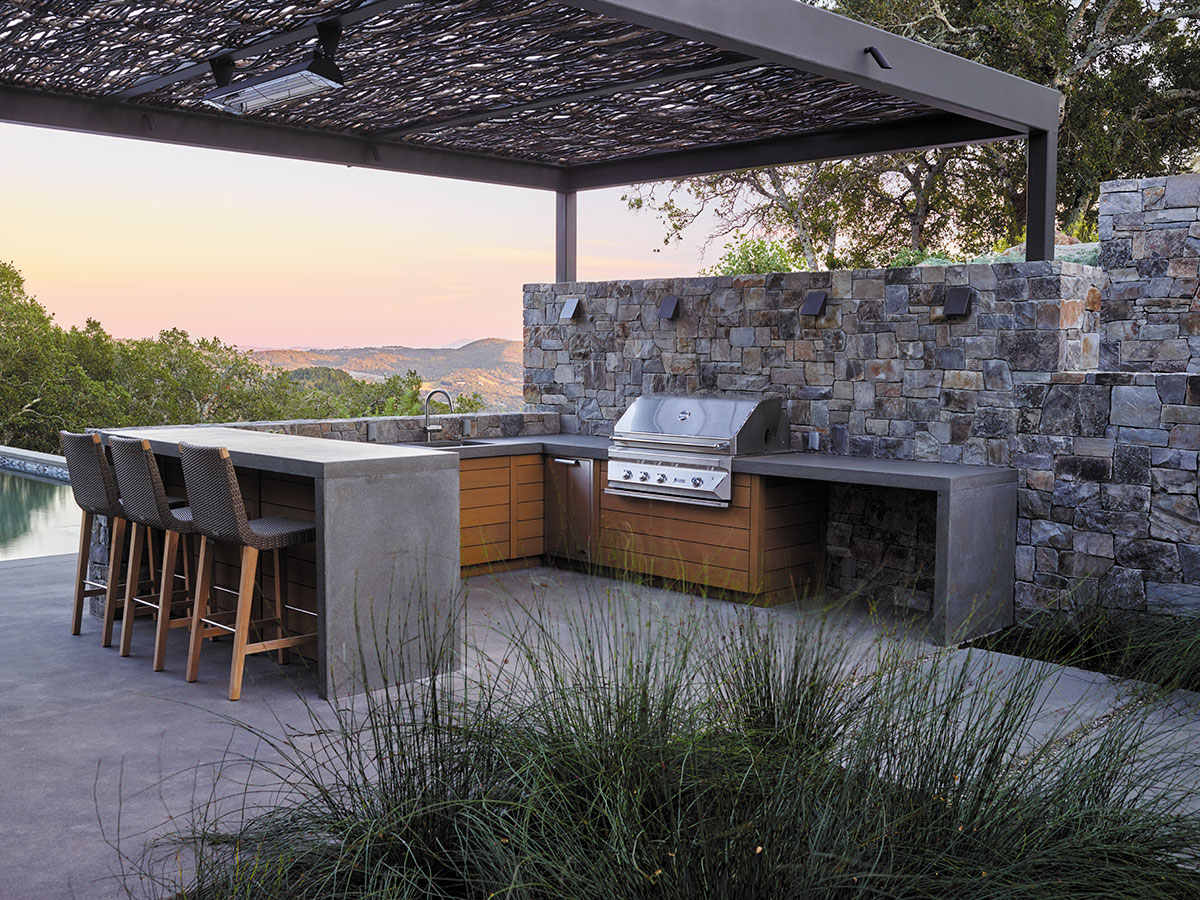
Roche agrees that comfort starts with anticipating how a space will be used across seasons. In a recent project, he incorporated recessed lighting, a low-maintenance gas fire feature and even built-in bench seating with integrated heating.
4. Think in Rooms, Not Just Zones
One of the most effective ways to elevate your outdoor space is to treat it like the interior: with distinct rooms designed for specific purposes. Whether it’s dining, lounging, cooking or soaking up the sun, defining how each space will function brings clarity and ease, even in a compact yard.
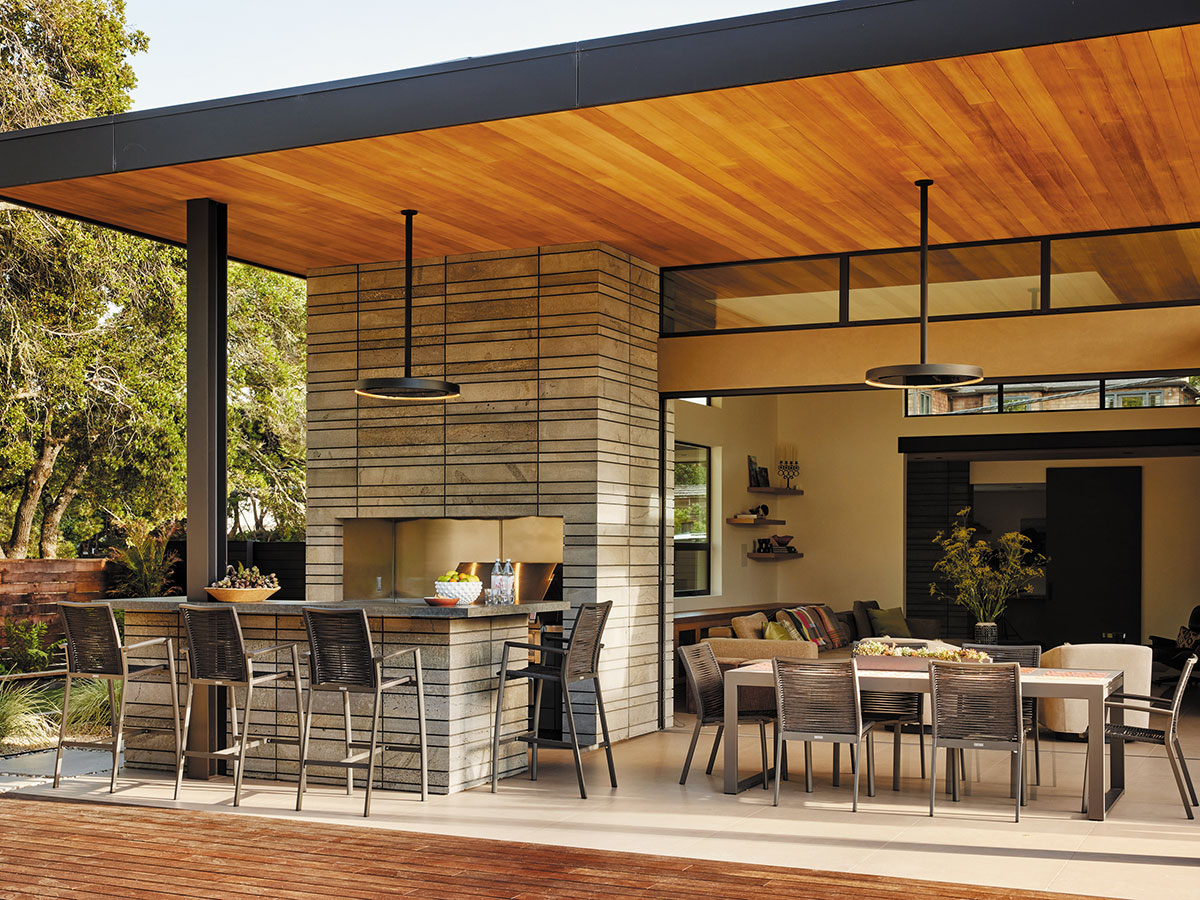
“People understand how to use a room, so when you give outdoor spaces that same structure, they immediately feel more welcoming,” Dorman says. In his Mill Valley project, he collaborated with a landscape architect to create three distinct outdoor “rooms”: a dining area under a shady trellis, a lounge with a firepit and a kitchen. Each space had its own identity but shared materials, lighting and visual flow. “When you walk through it, you’re moving through experiences, not just furniture,” he says.
In a property with stunning views overlooking Napa designed for a family that loves to entertain, Roche used broad steps and subtle shifts in elevation to guide guests between a sunken area with custom lounge chairs, an open-air dining space and a tucked-away firepit — all oriented toward sweeping valley views. “It doesn’t have to be a huge space,” Roche says. “It just has to feel intentional.”
Recreational features can enhance a sense of purpose, too. Play areas — like the bocce court Roche discreetly placed behind a hedge or the tennis court Webster nestled among oak trees — can serve as their own destinations within the landscape and add an extra layer of fun.
5. Style Sustainably
Sustainability in outdoor design is about making intentional choices from the ground up. “Reclaiming materials is a big part of sustainability,” Webster says. “I go to salvage yards for stone, or reuse something the client already has. I just love the story, reclaimed materials add to a project.”
Roche shares that ethos. “In one project, we reused old bluestone from the patio and turned it into pavers for the driveway; some of it we even cut down and used as veneer on the outdoor kitchen,” he says. “We always try to balance aesthetics with low-maintenance and low-environmental impact.”
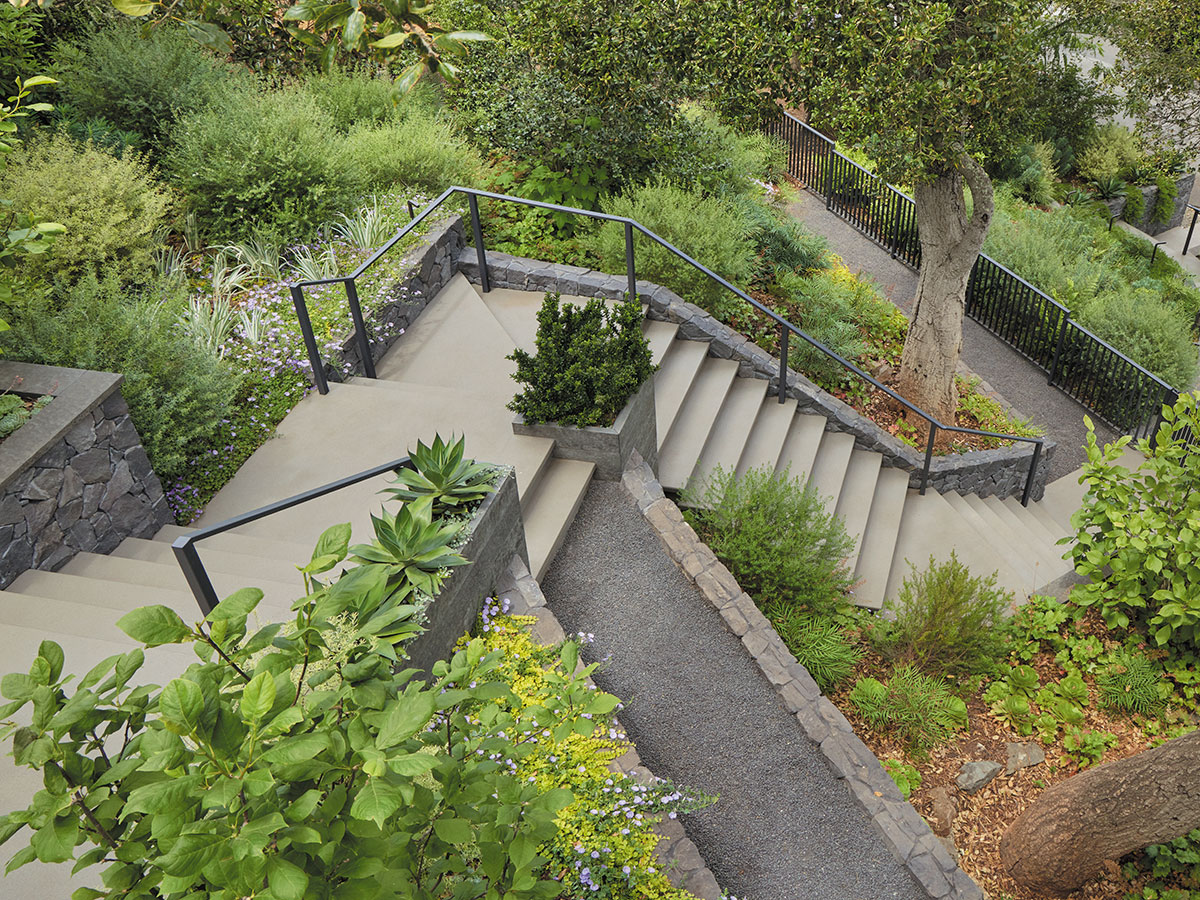
Sustainable material choices are key. “Instead of hardwoods, we’ve been using thermally modified ash, which is durable and more sustainable,” Webster says. And when it comes to plantings, Webster prioritizes native and climate-adapted plants and grasses whenever she can. “The more we can support birds, bees and other beneficial insects, the better,” she says.
In the end, these decisions are better for the environment, and they also result in richer, more meaningful landscapes. “When we’re thoughtful about what we use and where it comes from, we end up with outdoor spaces that really reflect a sense of place,” Webster says. It’s that same thoughtfulness that makes some of the most memorable rooms the ones that don’t have walls at all.