On the site of a former ranch house in the Los Altos Hills, a tailored farmhouse-style residence now serves as a hub for gatherings of family and friends. Conceived by architect Catharine Fergus Garber and her team at Fergus Garber Architects (FGA), including architect Sneha Avargerimath, the taupe stucco-clad structure is crowned by a gray standing seam metal roof and features multiple zones for entertaining, both in the expansive, lofty great room and outside around the pool. The clients, a couple with two young sons, “had relatively few programmatic requirements as far as families go, but they wanted to optimize the entertainment aspect of their lives,” Avargerimath says. To help them refine their vision, the architects and the clients visited three FGA projects together early in the design process. “One house had entertaining spaces on both sides of the living and dining room, and that appealed to them greatly,” Garber recounts. Smaller bedrooms, in favor of a more expansive great room, was another takeaway from those visits. “Everything else was malleable to support the entertainment parts of the house,” Avargerimath adds. (The ability to host dance parties — complete with a deejay, catering and a bar — was often mentioned.)
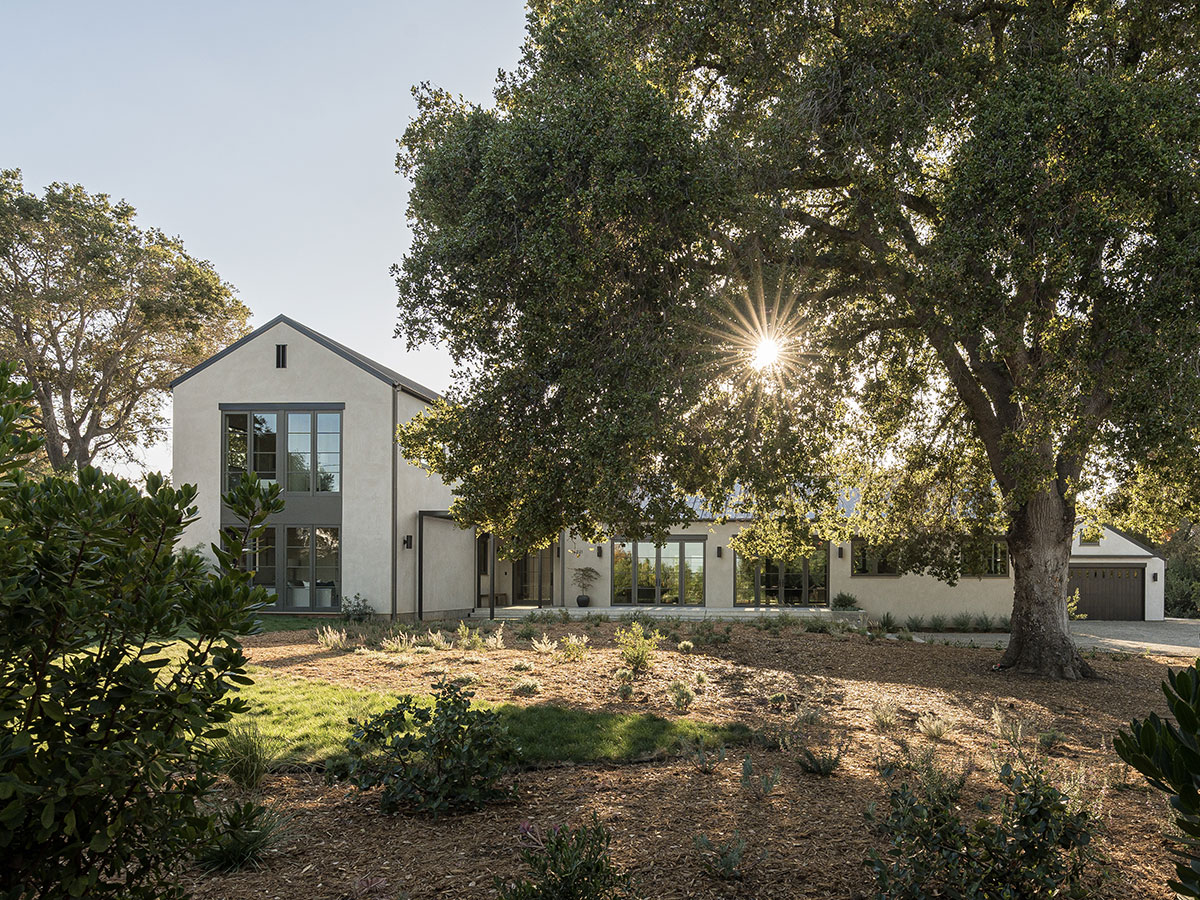
To determine the perfect location and orientation for the ground-up project on the flat 1.1-acre property, FGA took an empirical approach, because even in Silicon Valley, technology such as drone photography doesn’t always suffice. “We spent quite a bit of time standing on the roof of the existing one-story house,” Garber recalls. “Siting the new house around a mature oak tree was a pivotal starting point.”

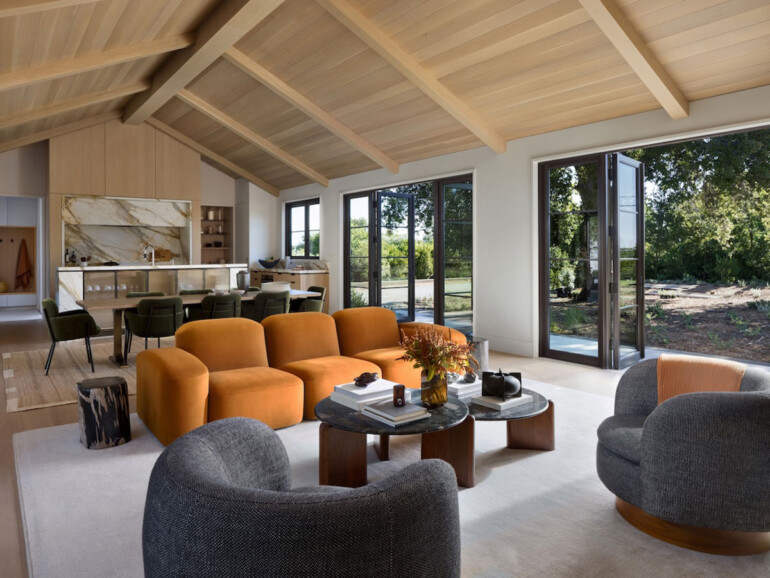
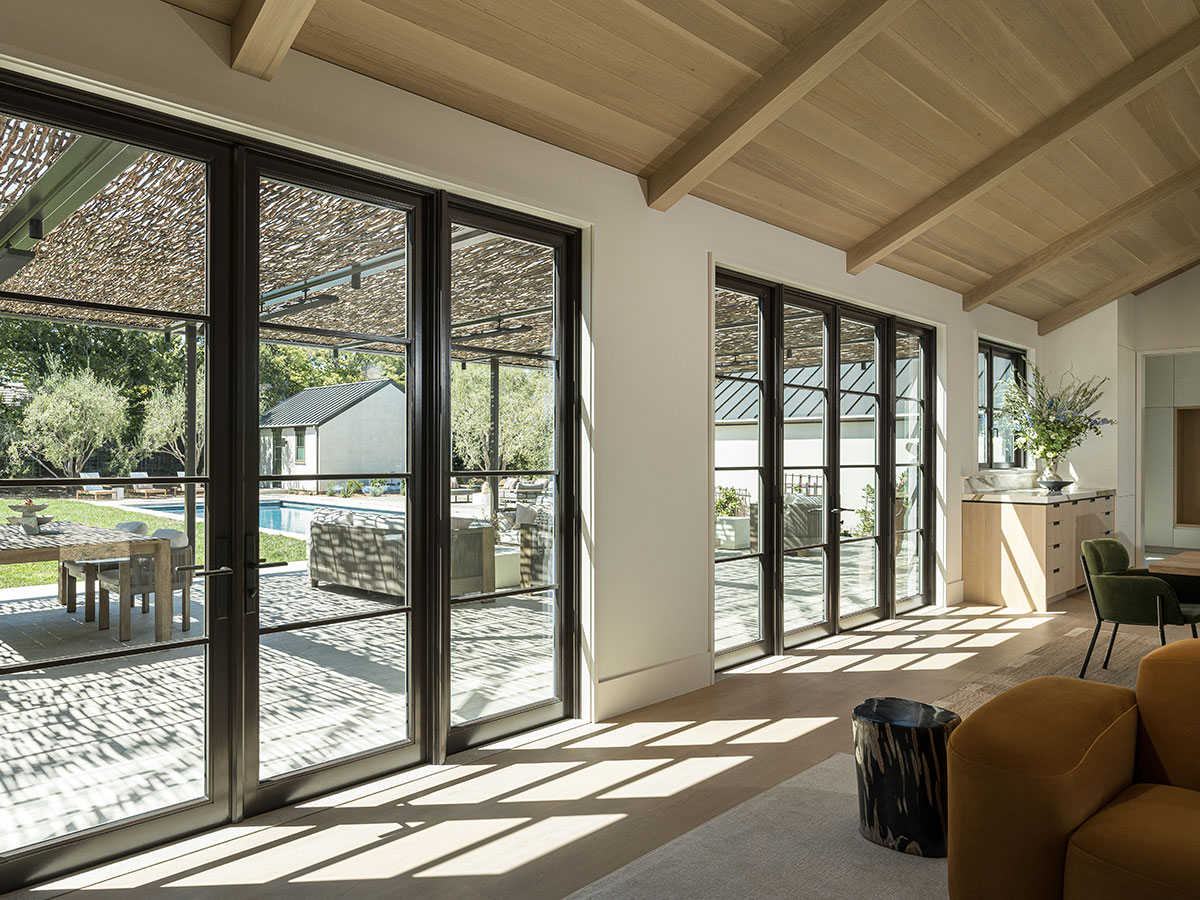
From the get-go, FGA collaborated with landscape architecture firm Collin Jones Studio to “position the house in a way that maximized privacy, preserved existing trees and captured key views,” Garber says. In the front yard, the oak tree not only makes a majestic first impression, but it also provides welcome shade for alfresco gatherings. To achieve the clients’ goals, FGA also worked alongside general contractor von Clemm Construction and interior design firm Studio JYO. The 4,700-square- foot house is T-shaped, encompassing four bedrooms and three-and-a-half bathrooms: The stem holds a vaulted great room — kitchen, dining and living areas — while the two-story crossbar is largely designated for sleeping quarters. The great room, which has four sets of French doors, opens onto the front porch and lawn on one side, and the covered patio and pool on the other. A poolside ADU offers an extra 500 square feet.
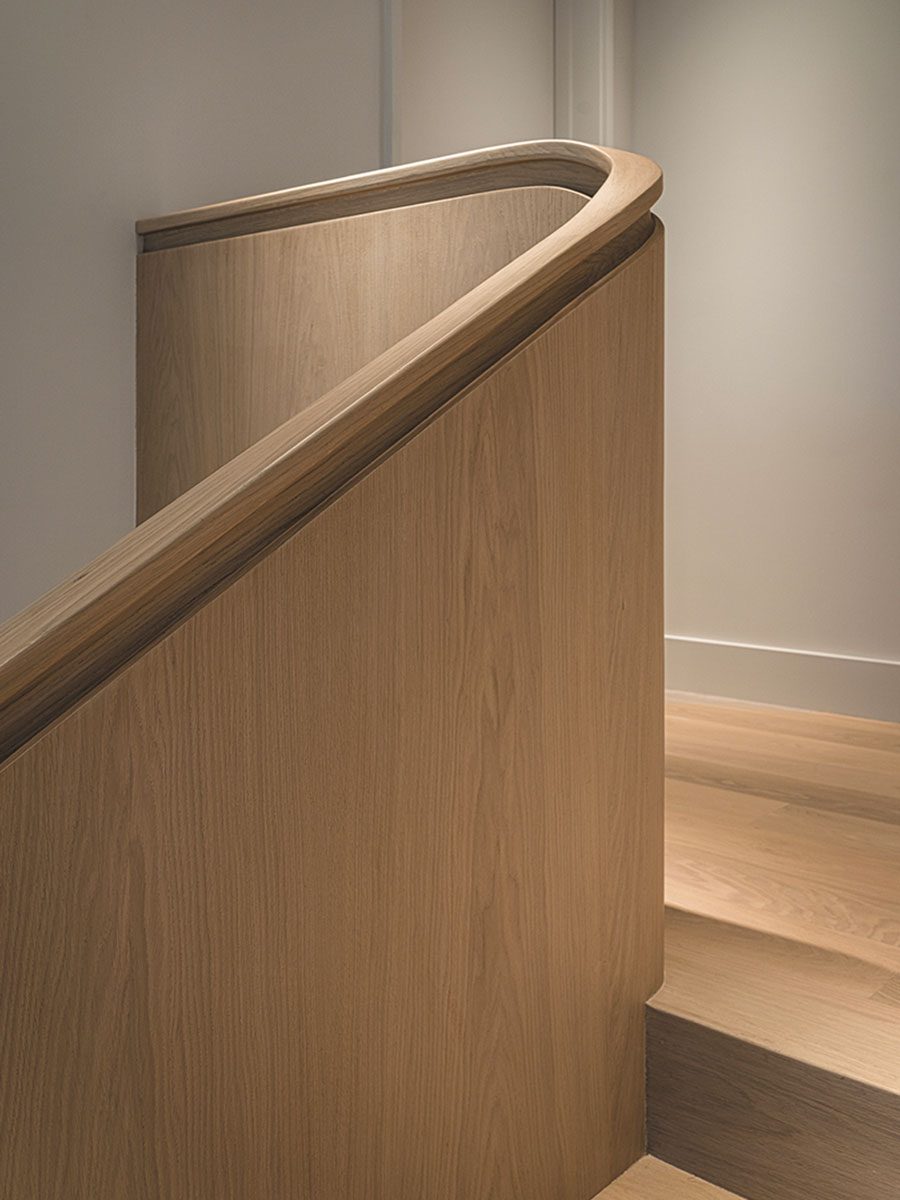
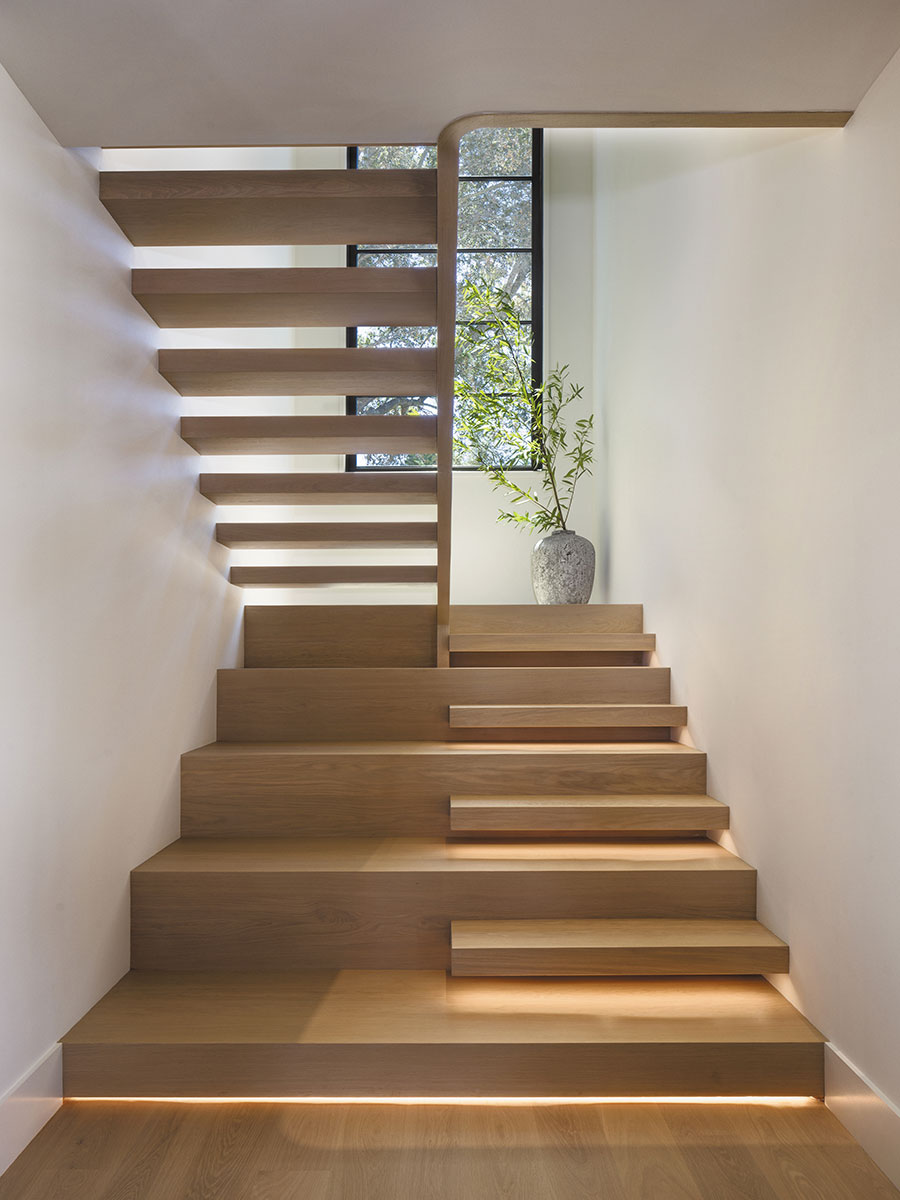
A striking 5-by-8-foot aluminum-clad pivot door defines the primary entrance, leading into a foyer that essentially divides the home’s public and private zones. Nearby are the stairs, designed by Studio JYO principal Joo Y. Oh. “The gentle arc of the staircase introduces a quiet sense of drama and movement, distinguishing it as a focal point,” she explains. On the lower portion of the stairs, the treads span from wall to wall with floating steps integrated on the right side only, creating open surfaces on the opposite side, perhaps to display artwork. Oh was also tasked with bringing warmth and texture to the rooms.
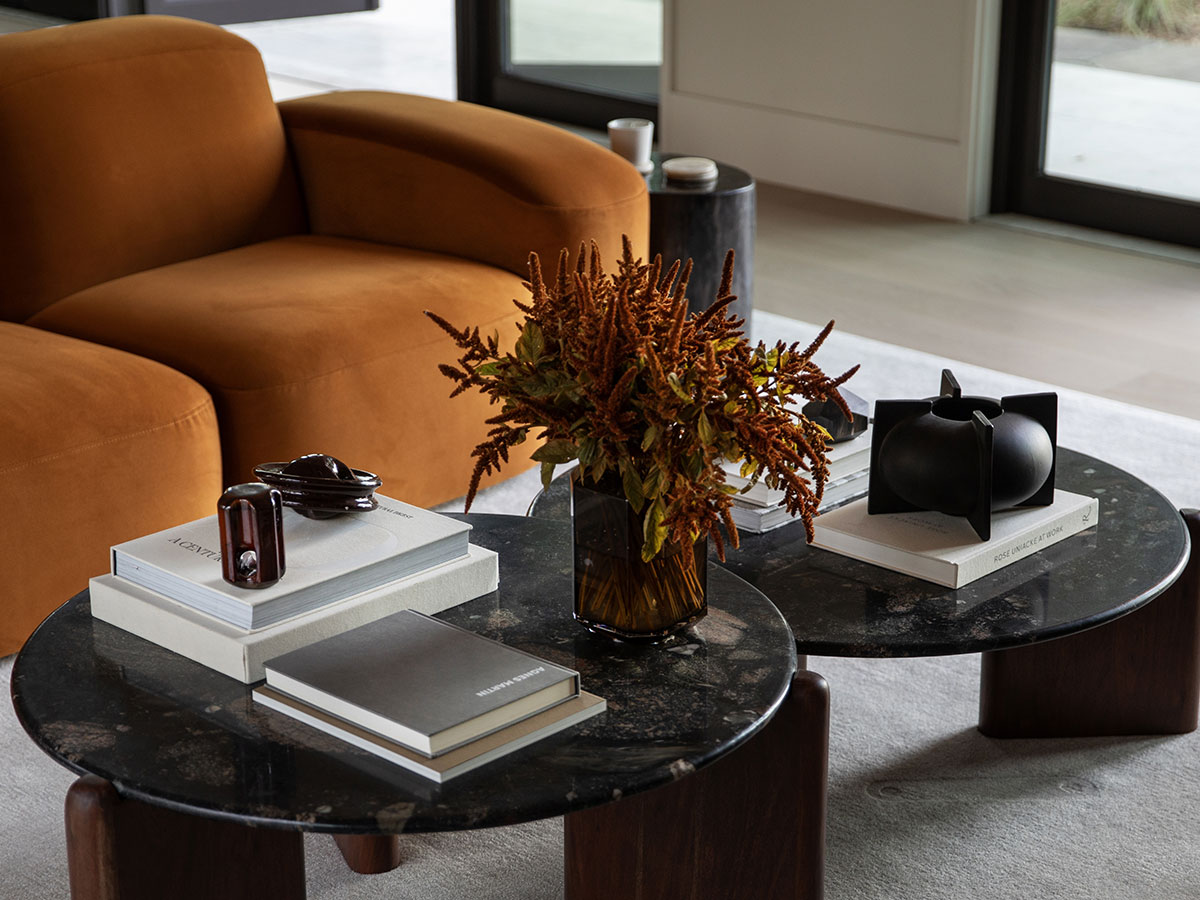
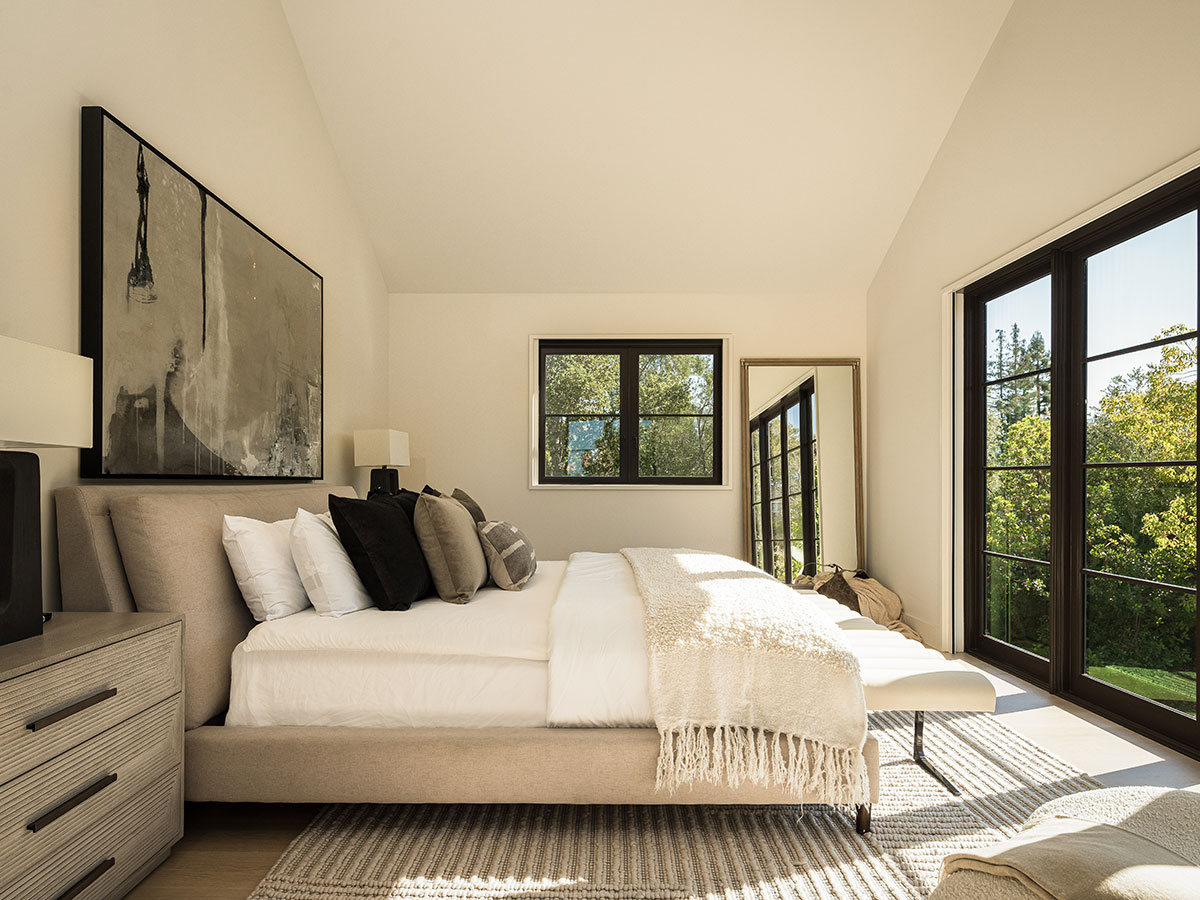
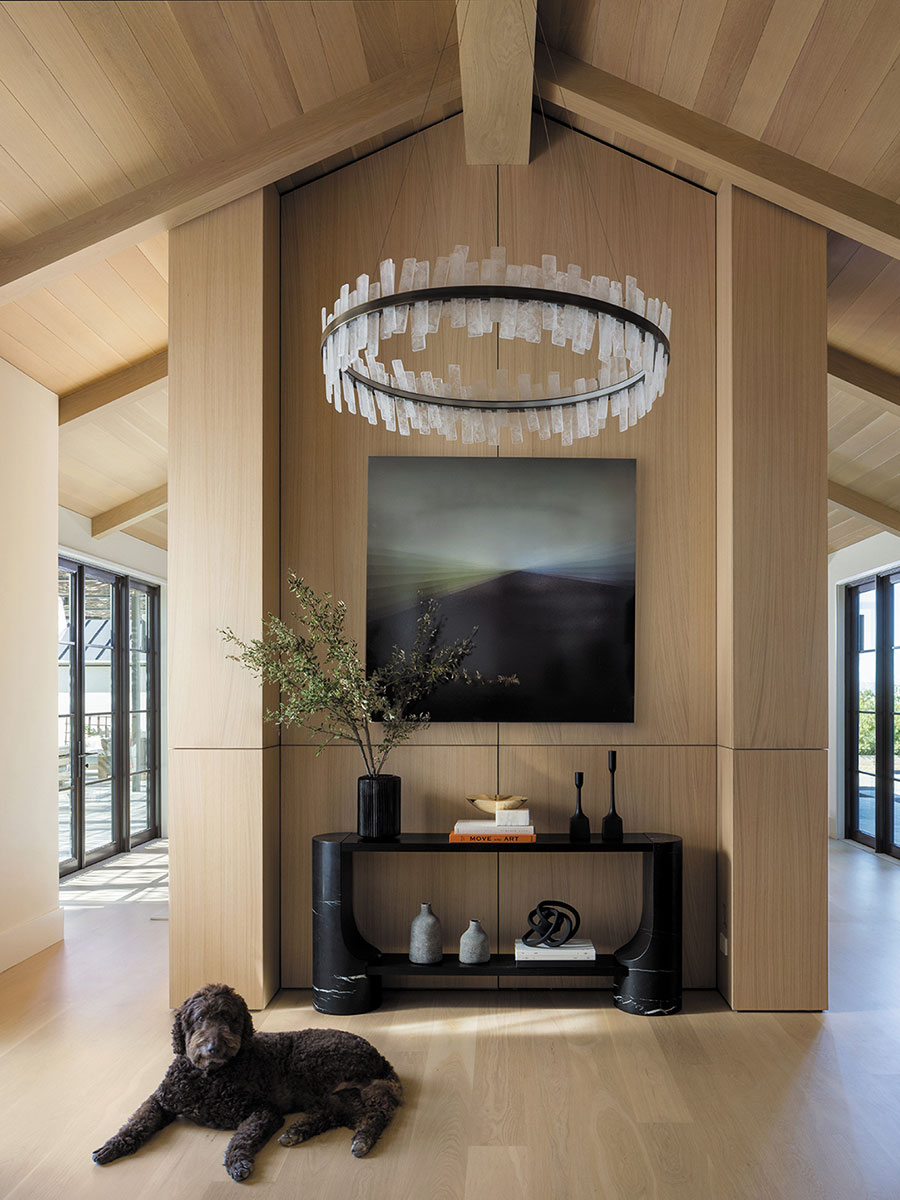
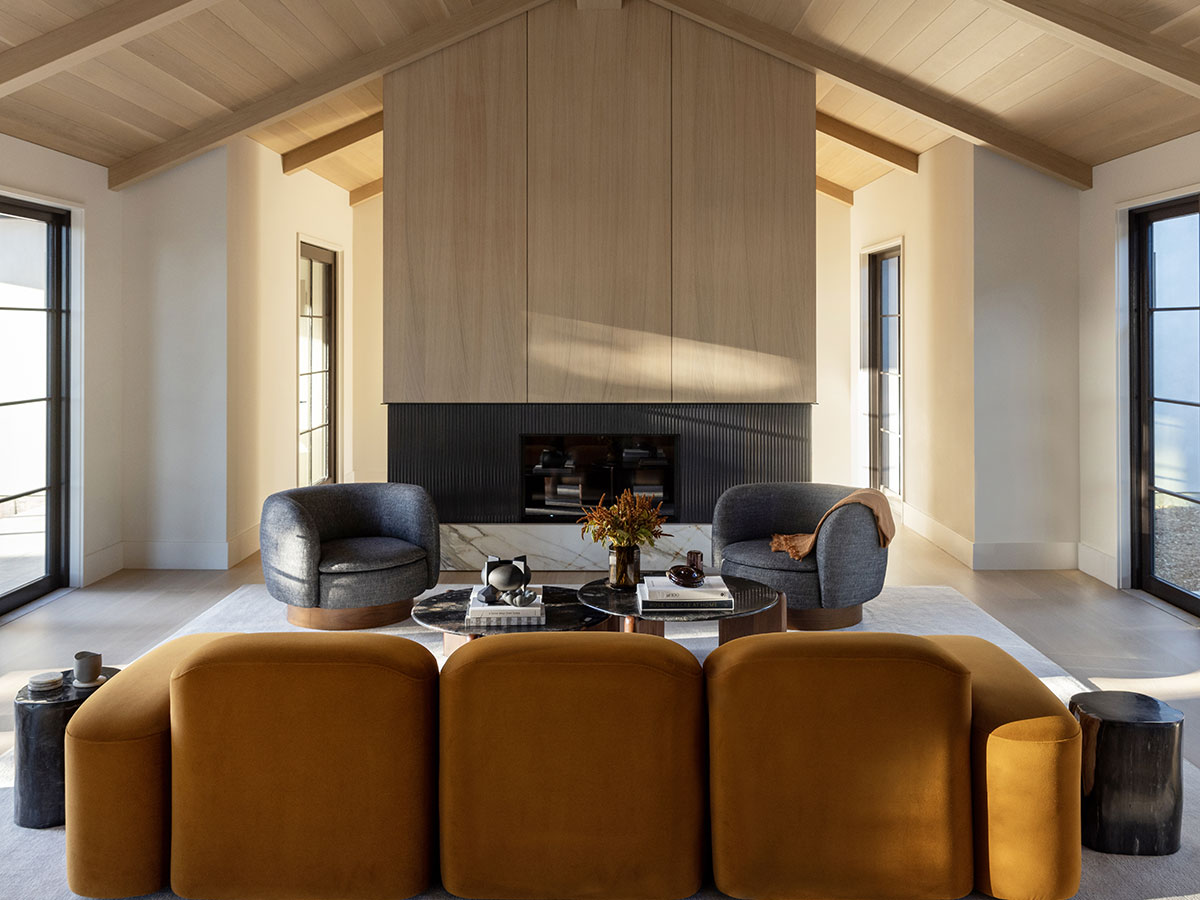
The wife “made it very clear she didn’t want to live in a white, modern box,” the interior designer says. Hence, Oh selected earthen tones like olive, rust, orange and eggplant for accessories and furnishings. In the living room, the curves and caramel hue of the Muse sofa from Design Within Reach counterbalance the linear architecture. Throughout the interior, Oh kept the wood tones light, introducing black accents for depth and sophistication.
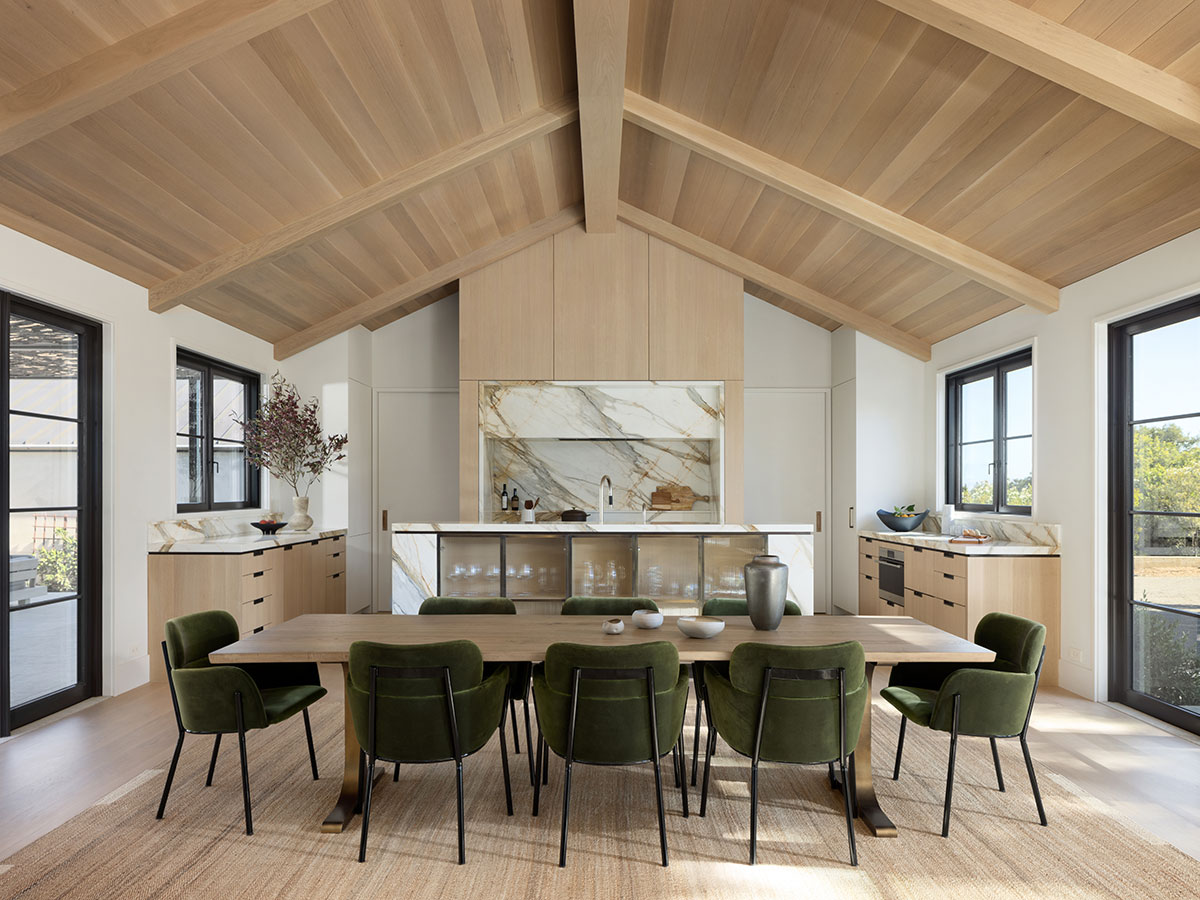
White oak cabinets, ceilings and floors yield a uniform backdrop. In the great room, the repetition of various materials further lends cohesion. The kitchen features a backsplash and countertops composed of Macchia Vecchia marble, along with oak wall paneling and cabinetry crafted by Henrybuilt. The latter, which was customized onsite, includes oil-rubbed brass details. On the opposite end of the great room, the fireplace, with its oak, marble and oil- rubbed brass surround, “elegantly mirrors the design language of the kitchen,” Oh observes.
Given the clients’ penchant for entertaining, Oh aimed to “create a series of flexible seating zones that could accommodate a range of activities and social dynamics,” she says. “We designed groupings that encourage guests to come together or naturally break off into smaller, more intimate gatherings.” The back patio, for instance, offers distinct sections for dining, lounging and relaxing on chaise lounges.
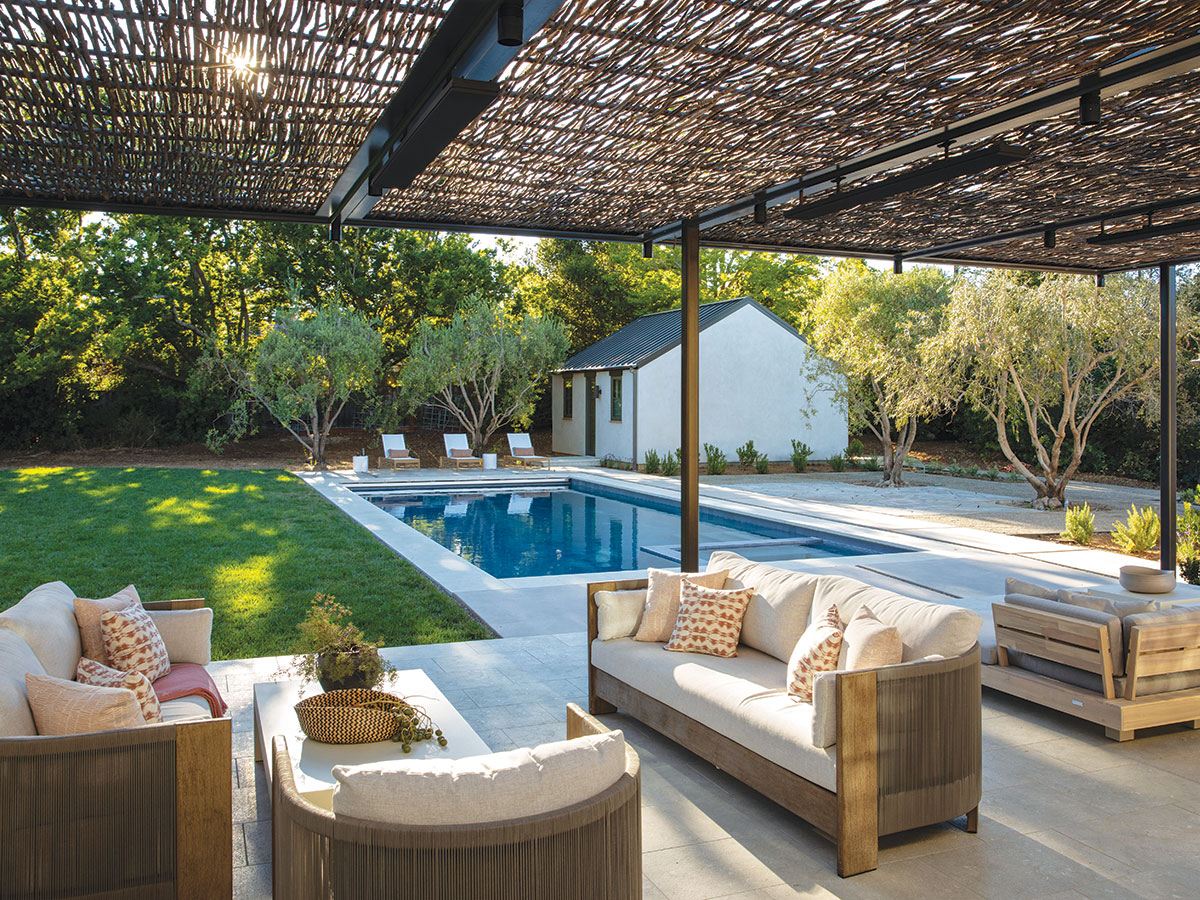
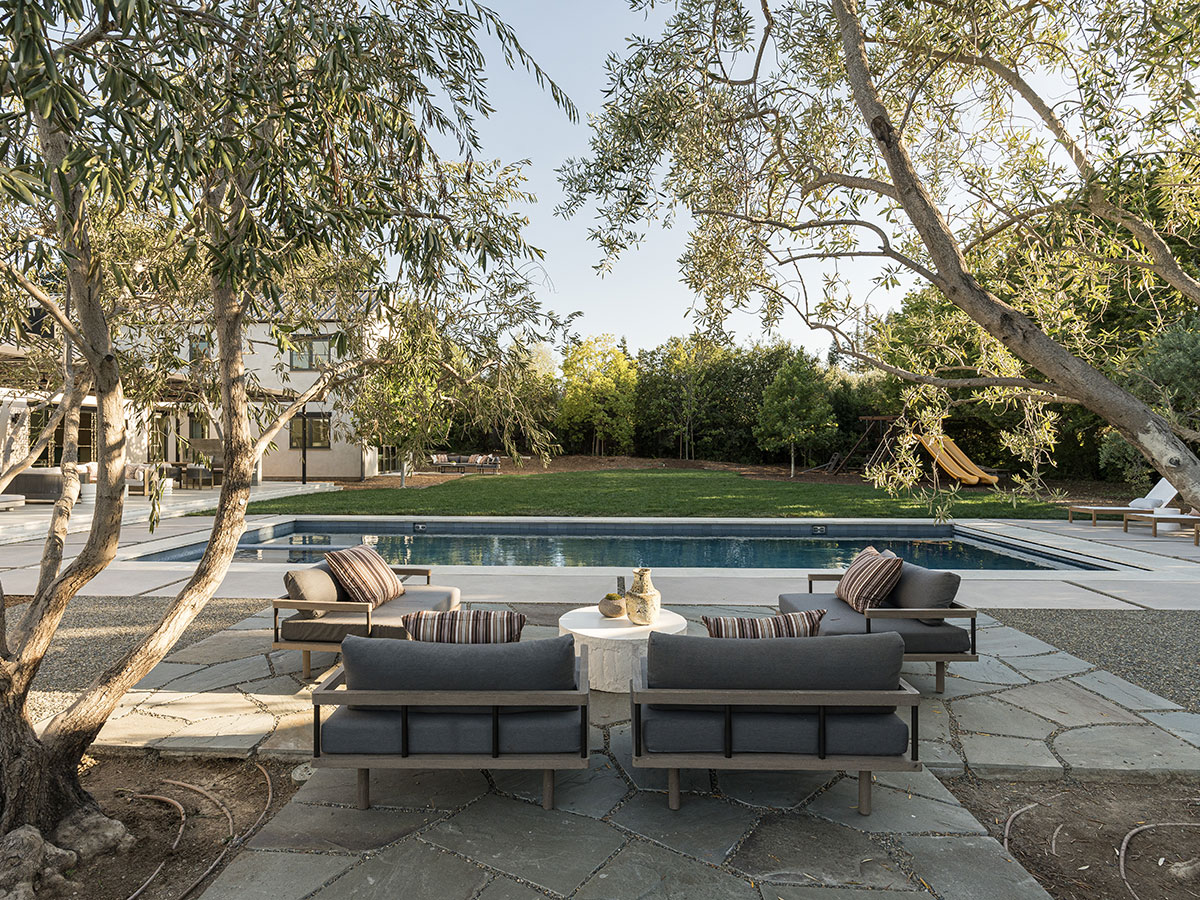
Overlooking the pool and backyard, a steel arbor is embellished with willow panels overhead that were custom fabricated by The Willow Farm — at once functional and decorative. “I wanted to use as organic a material as possible to mitigate its size and strengthen the indoor-outdoor connection,” explains landscape architect Collin Jones. “Also, the quality of the shade that the woven willow casts is wonderful, and the shadow patterns are rich and interesting.”
Across the pool, additional loungers beckon. Meanwhile, a firepit anchors another casual seating spot. “With young, active children and a lifestyle centered around frequent entertaining, the clients needed a layout that could seamlessly support both vibrant social events and quieter moments of relaxation,” Oh says.
With the children — and thus, durability — in mind, Oh ensured none of the interior or exterior furnishings were “too precious or fragile” by sourcing many pieces from retail brands such as CB2, West Elm and Design Within Reach. “I employed creative strategies to make these pieces feel bespoke and refined,” she says. Case in point: The live-edge walnut Mars dining table from Sobu, for which Oh collaborated with Jafe Custom Finishing on a custom gray-washed stain. “This subtle yet impactful modification transformed the piece, elevating it from a simple retail item to a centerpiece that feels both intentional and unique,” she says.
Indeed, such meticulousness on the part of all of the firms involved in the project turned what is, in Garber’s words, “a straightforward building plan,” into a singular abode. Take the door thresholds. Rather than comprising aluminum, custom thresholds were made with Pistache limestone, the hardscape material for the patio. “It’s one less transition material between the inside and outside,” Avargerimath says. “You recognize it as a higher-end detail on homes that are custom. We push for those details because they really make a difference.”